| Project name | Knowledge Management Module |
| Role | UX Designer / UX Strategist |
| Duration | 1,5 years |
| Team | Developer Team, Product Owner |
Project Overview
I led the UX redesign of the Self-Service Portal, a critical end-user facing module enabling users to search for information, initiate service requests, and seek support.
What is the purpose of this portal?
Shift left strategy: empower end-users to solve problems independently with minimal support interaction.
The main purpose of the portal is based on the shift-left strategy of service providers. We were tasked to size up the possibilities and pain points of our current user base regarding this goal whilst answering the most requested features.
Research & Discovery
We had a longer Discovery phase for the project, during which time I conducted the neccessary research activities while the development team was focusing on the architectureal questions and maintenance.
I took the following steps to cover the problem space:
- Conducted comprehensive research to map existing features and identify core challenges: including sitemap, tlaking to stakeholders and looking up old research data and the documentation of previous design decisions.
- Facilitated internal workshops with consultants: consultants were important stakeholders, as they set up the portal with customers, so they have a lot of information about that process, and the overall reception of the portal. They provided a perspective ont he struggles of application managers, and the current best practices.
- Performed customer interviews and user testing: I interviewed several application managers from various business backgrounds, then conducted user research on employees using the portal. As our own company used the same product, it was a fine starting point to test it on people from non-development domains.
- Analyzed competitor offerings and incorporated Gartner insights: The company is conscious on it’s standing in the Gartner charts, and we knew who were our main competitors.
Findings
The portal was perceived as a less central module of the whole product for the business, though for the customers it was the main touchpoint with their users, so their requests were not highly prioritized in the past.
The pain points and missing features were centered around better formatting and customization options, a more intuitive navigation and a setup that helps application managers provide the optimized information for their end users. Alternatively, a way to show the visitors what they need at the time of their visit.
Some of the basic concepts for services were too complex for customers and not properly integrated within the system, and we found a lot of nifty solutions by customers to make the most out of the product, mainly for knowledge sharing and enhancing findability of services and information.

Strategic Approach
After thorough evaluation, we decided to pursue a “green field” project, rebuilding the portal from the ground up. Key considerations included:
- Outdated technical stack requiring modernization
- Emerging company design system project
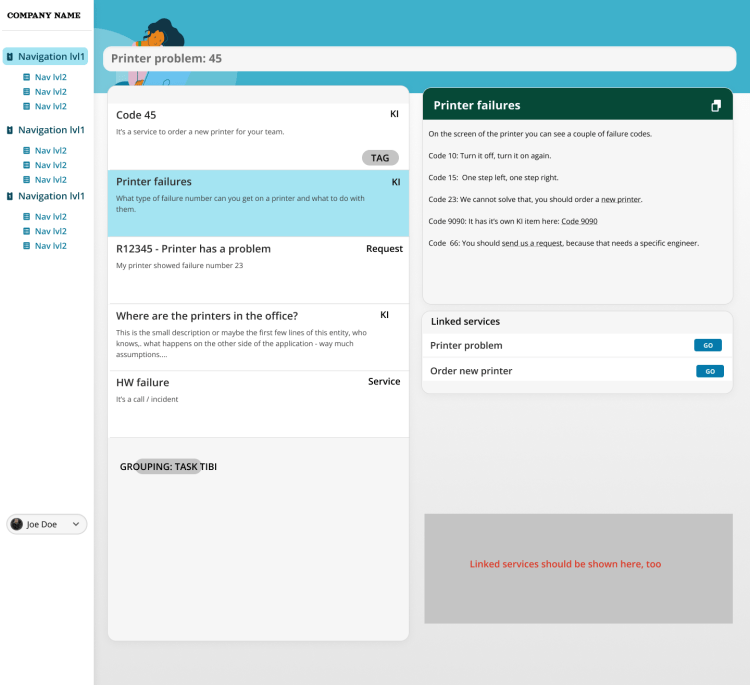
- Opportunity to enhance user experience through contextual and personalized search
Design Exploration
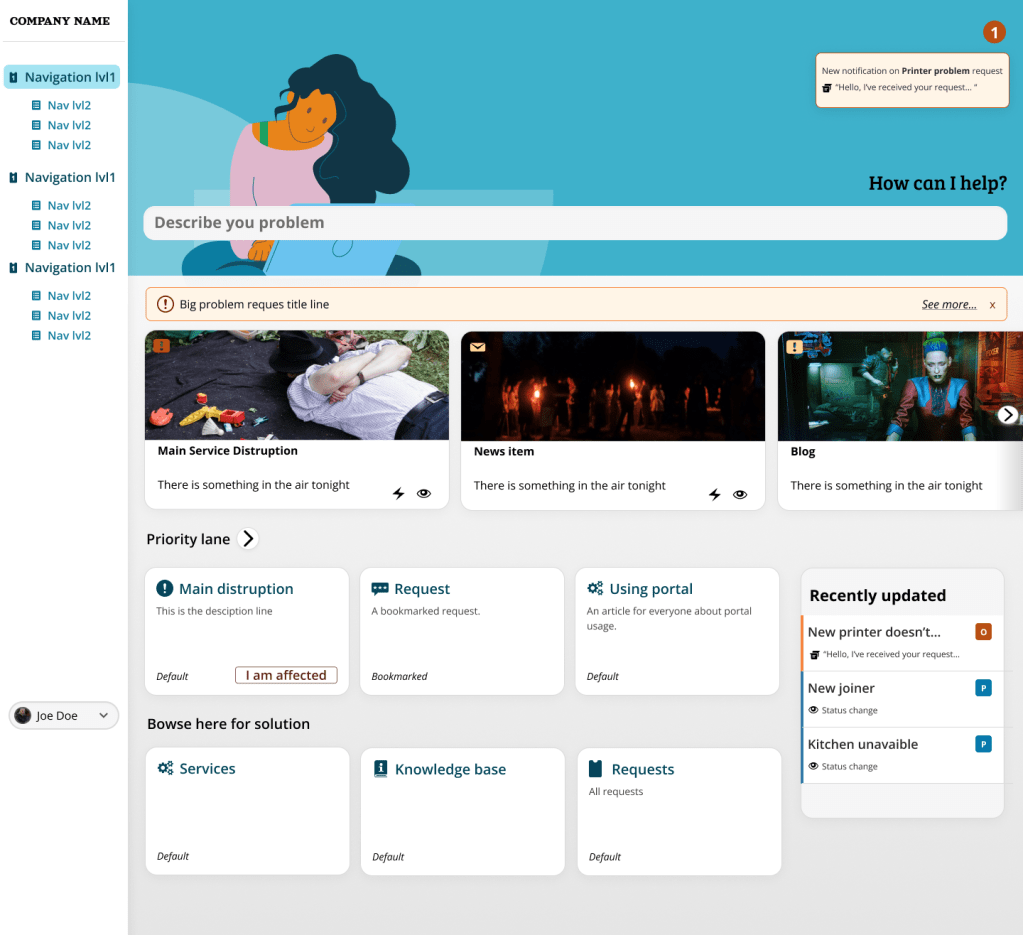
Based on the findings, the requirements for the redesign were the following:
- Display results based on user context (department, role)
- Leverage historical user data (previous and frequent searches)
- Create more intuitive and findable user experiences
Design System Integration
I collaborated with the emerging design system team, building UI solutions that used their emerging component guidelines. This process deepened my understanding of design system principles and component design.
Key Outcomes
- The team created a coded prototype demonstrating the portal’s potential, including a basic search functionality
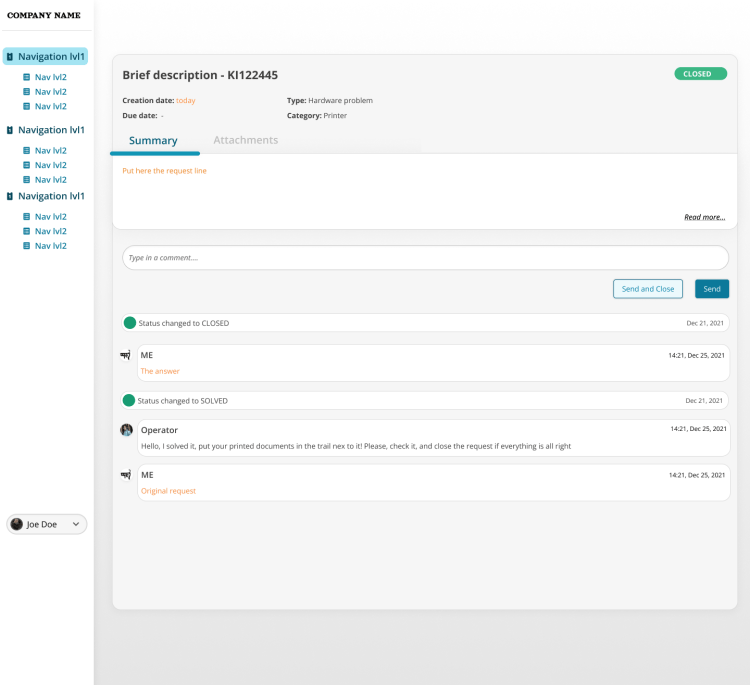
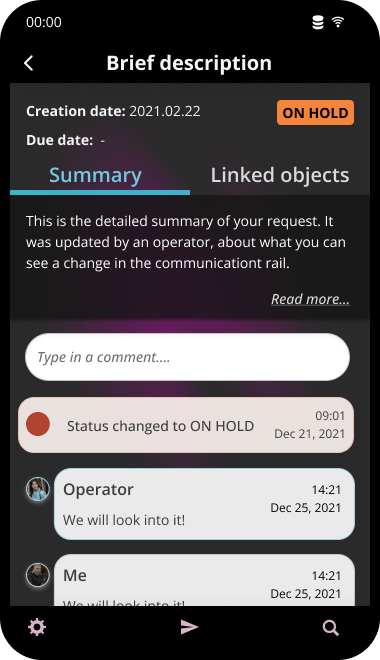
- The team developed the user flow for handling the end users’s request statuses.
- Implemented Google Analytics to address customer pain points from the research
Learning & Insights
- Navigated complex product redesign constraints
- Balanced technical limitations with user experience goals
- Explored potential for future AI-enhanced search capabilities
While the full implementation was deferred due to shifting business priorities, the project significantly advanced our understanding of user-centered design in enterprise service management.


 Ágnes Fábián